The Catchphrase Cannot Do a Character’s Job
A catchphrase can make a comic character recognizable, but a clear point of view makes each return feel earned, varied, and worth remembering.
A character in a sketch keeps saying, “That’s not how we do things here.” The first time, the line lands because the character has just rejected a harmless suggestion with the gravity of a border official. By the third return, the words are familiar. What matters now is whether the character’s particular way of seeing the world keeps giving them a new reason to say them. A catchphrase can make a comic character recognizable; a point of view makes that recognition mean something.
If you are deciding what to build around, begin with the character’s view of other people, not a sentence you hope the audience will repeat. The line is a handle. The character’s beliefs, priorities, and habits are what the audience grasps.
What makes a repeated line feel like character?
A catchphrase becomes expressive when it grows out of a stable comic logic. The character may treat minor inconveniences as betrayals, read every conversation as a contest, or regard politeness as a complicated form of accounting. Their repeated line then sounds like a natural consequence of that worldview, even when the immediate situation changes.
Without that logic, the line is only a sound cue. The audience can recognize it, but recognition by itself does not create anticipation. A laugh often depends on noticing how the character has interpreted this particular moment—and how that interpretation differs from everyone else’s.
Think of the phrase as a recurring verdict. It tells us what the character has decided, while the scene supplies fresh evidence, real or imagined, for that decision. If the verdict never changes in force, context, or cost, the return can feel like a button pressed on schedule.
Which situation are you writing for?
Choose the role you want the repeated line to play. The same phrase can be useful in one kind of material and dull in another; the character’s point of view should determine which route fits.
If the character is new, should you start with a catchphrase?
Start with a belief that creates choices, then let a phrase emerge if the character would naturally use one. A new character needs a recognizable way of reacting more than a slogan: an anxious host may insist that every guest is “perfectly expected,” while quietly rearranging the room to control where they sit. The phrase can support that behavior, but the behavior makes the person legible.
If the audience already knows the character, can the line return often?
It can, provided each return reveals a new application of the same outlook. A familiar line may mark a shift in confidence, expose a contradiction, or show that the character has mistaken a serious moment for a routine inconvenience. Keep the core belief steady and vary what the character thinks it explains.
If a line gets a laugh once, should you preserve it?
Preserve it only if it still belongs to the character and serves the scene. A successful line can become a distracting souvenir if the writing pauses to display it rather than letting the character act. Keep the wording when the reaction still feels motivated; revise or remove it when the scene has to bend around the phrase.
If the character has no signature line, are they memorable?
Yes, if their choices form a distinctive pattern. A person who apologizes to furniture after bumping into it, then blames the furniture for making the apology awkward, may be recognizable without repeating a set phrase. A verbal refrain is one kind of pattern, not the only one.
How do you keep the point of view consistent?
Write down the character’s private rule in plain language. It should be specific enough to shape decisions, not just a broad trait such as “bossy” or “nervous.” “If I can name the procedure, no one can surprise me” gives a writer more to play with than “likes control.”
Then ask what the character notices first, what they dismiss, and what they interpret incorrectly. A character who believes every favor creates a debt will pay attention to who brought the coffee, ignore the actual conversation, and treat a thank-you as the opening of negotiations. That selective attention is a source of jokes because it organizes the whole scene.
Consistency does not mean identical reactions. It means the reactions can be traced to the same underlying belief. The character may become generous, defensive, or unexpectedly quiet, but the audience should be able to understand how the situation pressed on their particular concern.
What should change when the catchphrase returns?
Change the pressure around it. A phrase can land differently when the character has more to lose, when someone else adopts it, or when the usual target is absent. The words may remain fixed while their function shifts from dismissal to reassurance, from boast to plea, or from private habit to public embarrassment.
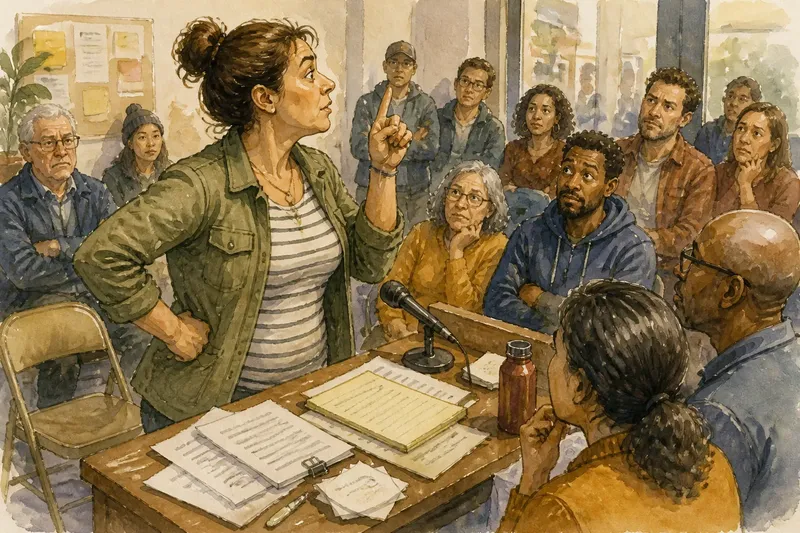
For instance, say you are writing a fictional neighborhood organizer whose refrain is, “We have a system.” At first, she uses it to stop a neighbor from moving a folding chair. Later, during a crowded community meeting, she says it while realizing she has lost her own notes. The audience can hear the same confidence, but now the line is also a defense against visible confusion. The change comes from the situation exposing a new side of her belief, not from adding extra emphasis to the wording.
Use this kind of return selectively. If every appearance announces a deeper emotional layer, the refrain starts to feel like a device that must be serviced. Sometimes its job is simply to name the character’s familiar misreading and let the scene move on.
When should you cut the repeated line?
Cut it when the audience can predict the wording but has nothing new to notice. That may mean the phrase is too broad, the scene repeats the same conflict, or the character’s viewpoint has not been made clear enough for the words to carry meaning.
Try rewriting the moment without the phrase. If the character’s action and attitude remain distinctive, the line may be unnecessary. If the moment turns generic, strengthen the decision the character is making before restoring any verbal refrain. The aim is not to protect a catchphrase; it is to preserve the comic logic that made it useful.
A phrase can also be the wrong fit for a character whose humor comes from physical choices, silence, or changing tactics. Giving every comic figure a verbal signature can flatten the differences between them. Let one character repeat a phrase, another repeat a ritual, and a third surprise the room by abandoning a habit when their priorities change.
How can you test the character before polishing the line?
Draft a short exchange in which the catchphrase is unavailable. Keep the character’s objective, but remove the signature wording. Then check whether their attention, assumptions, and decisions still distinguish them from the other people in the scene.
- State the character’s private rule. Make it concrete enough to guide a choice.
- Identify what the character notices. Give their attention a comic bias.
- Write a reaction without the refrain. Let behavior carry the point of view.
- Bring the phrase back in a changed circumstance. Give the return a fresh target or consequence.
- Remove a return that only signals recognition. Keep the audience’s attention on the scene, not on a cue.
These checks help you decide what fits the situation: a phrase can be the right recurring tool when the character’s worldview gives it fresh work to do. When the words are doing all the work, build the person first. A memorable catchphrase is strongest when it sounds less like a writer’s invention and more like the only answer this particular character could have given.